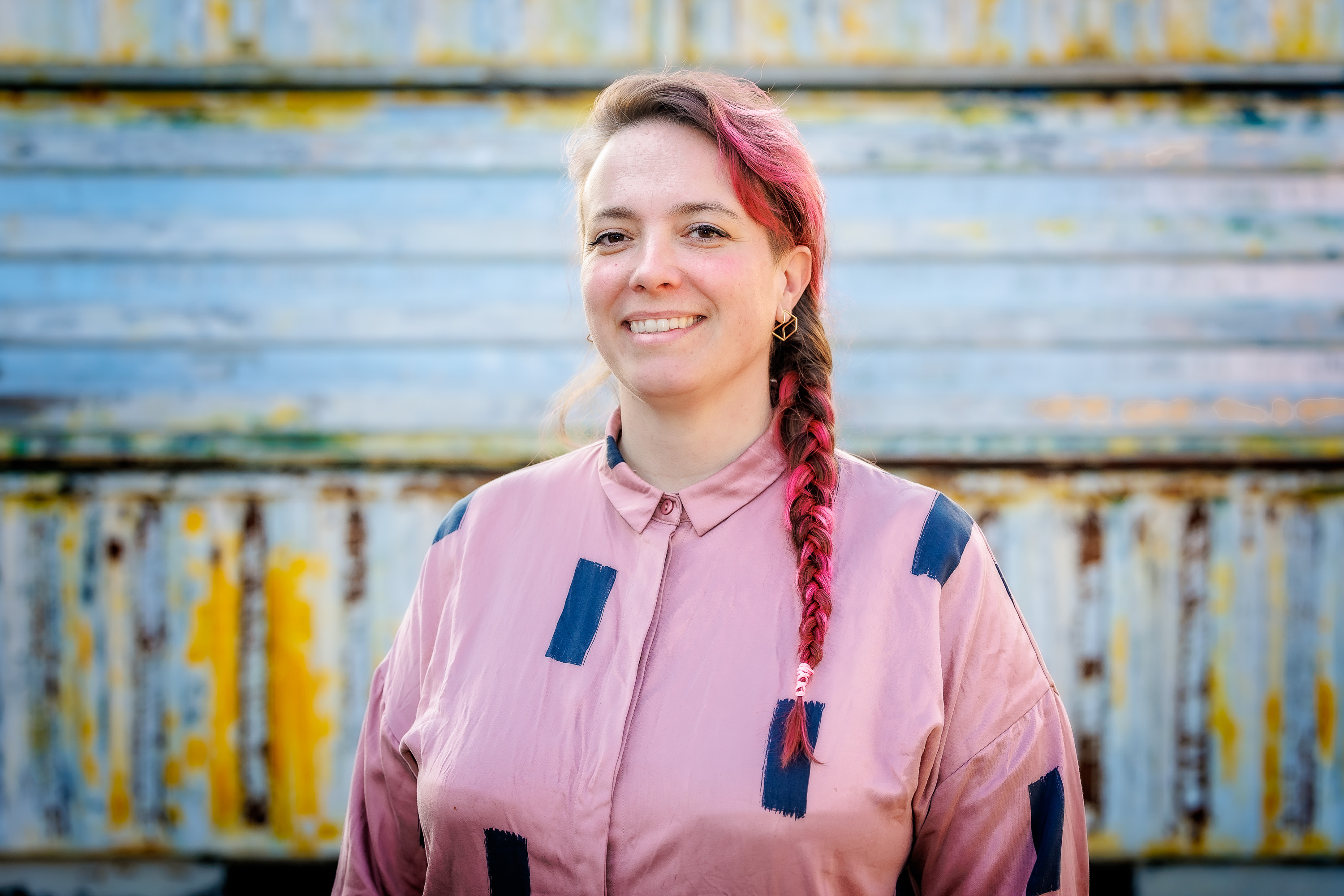
Interview with Advisory Board member Nienke Huitenga Broeren: 'I want the pioneers who have taken risks for bold, creative applications of IX to have a voice on the Advisory Board.'
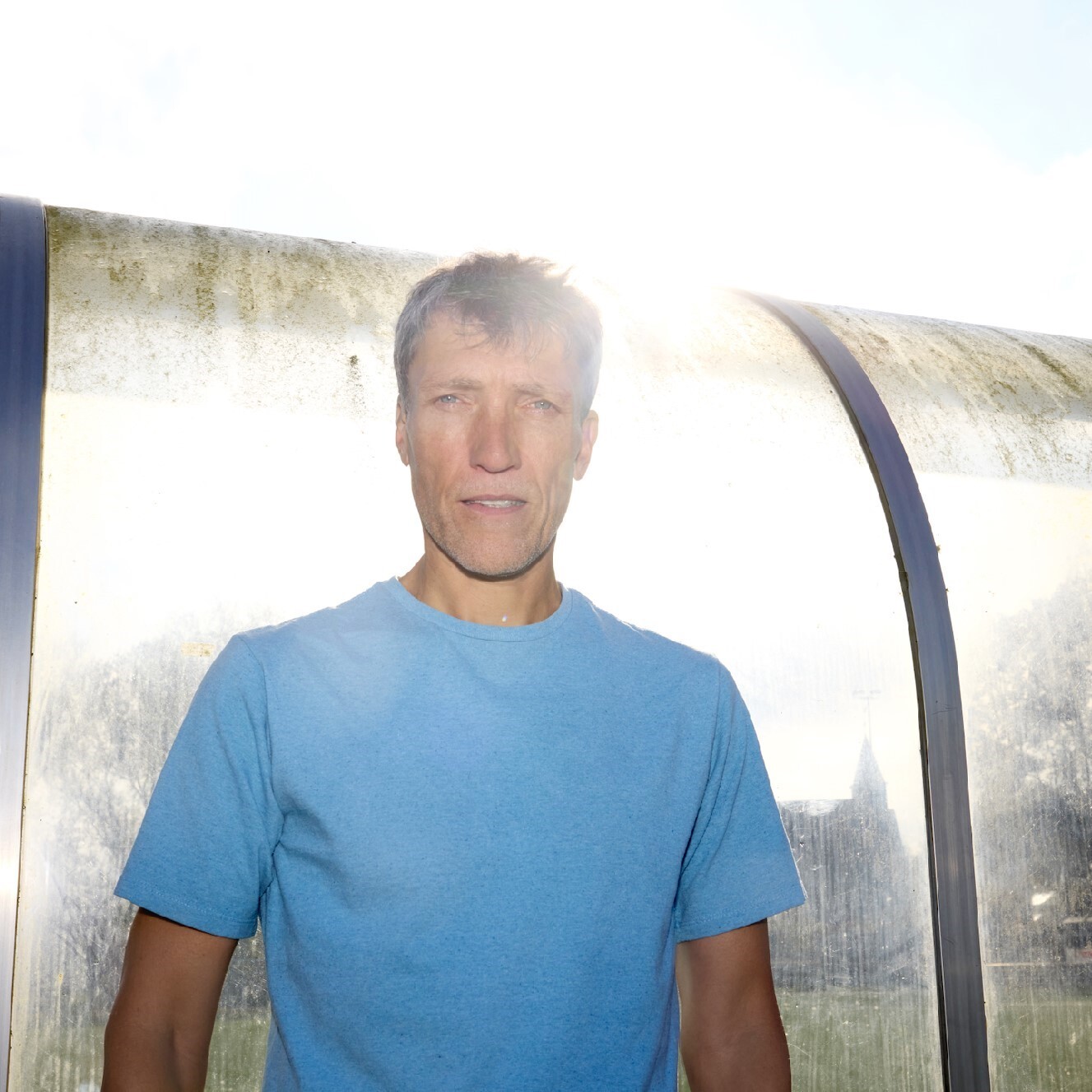
Nils Adriaans
The CIIIC Advisory Board consists of 24 carefully selected members who provide solicited and unsolicited advice to our program team on substantive main issues. As representatives of the IX community and ambassadors of IX in the Netherlands, they are crucial for the connection with the industry. But who are these members, what do they do, and—most importantly—how do they view IX?
In part 19 Nienke Huitenga Broeren, immersive director and producer at Studio ZZZAP.
Who are you, what do you do?
‘I am Nienke Huitenga Broeren, immersive director and producer at Studio ZZZAP (in Utrecht) and amateur cellist. I prefer to create immersive spaces where stories can be discovered, rather than the other way around. In recent years, I've been doing this a lot with VR, but also for and with your ears (audio installations) where your own imagination of a world plays a role. My career originated from pure curiosity about how we experience and understand our world, and which innovative technologies can make us more aware of it. This has taken me quite far; this year, the VR documentary Lacuna—about an 86-year-old Jewish woman who lost her parents during World War II, which I made together with Maartje Wegdam and Studio Biarritz—was nominated for the Immersive Competition in Cannes and the Golden Calf for Best Digital Cultural Production 2025. That was really incredibly special to experience and a great pleasure. Dutch productions are really making it far!
My love for immersive experiences is very diverse. I enjoy working with all sorts of different immersive tools and subjects. At the moment, for example, I am working as a producer on an incredibly beautiful VR documentary about grief after suicide with director Willemiek Kluijfhout, and since last year, I have been working as a director with ENTR on a multi-user VR about life in Amsterdam in the 17th century. Additionally, I just created my first interactive audio experience for children for Cinekid (Bakkus, the Story Devourer), together with Hay Kranen. It is a particularly productive year.
Besides my directing and production work, I am also the coordinator of the Next XR talent program at Playgrounds, where I have been guiding a group of immersive talents for two years; currently, six talents whom we support with a talent development budget. We offer them experimental space, thinking space, and mentorship from an expert in the immersive field. It's really great to be able to do this because I can share my own joy in following immersive developments with them and connect them to all the cool colleagues and events I know.’
Immersive is actually an incredibly non-word for something very beautiful: a curiosity about the 'language' of the hyper-personal experience that can arise where technology and stories blend.
Why 'immersive', what is your connection to new content/technology?
‘Immersive art begins with people for me, not with technology. Immersive is actually an incredibly non-word for something very beautiful: a curiosity about the 'language' of the hyper-personal experience that can arise where technology and stories mix. The immersive effect is one of the strongest outcomes of this mix of conditions, an ancient feeling that we as humans find very magical. After all, your very first immersive experience was already in your mother's womb. We all essentially have a talent for it! So, we reinvent that feeling every time new technology sheds new light on it. That's what I find interesting about this art form and industry. Why do we want it? What does it bring us? What meaning do we derive from it?
The immersive field, in my opinion, has always been there, but we used different words for it ten, twenty years or longer ago. It has just never been as connected and visible as it is now because new technology (XR tools) seems to bundle it together into a large media magic machine. But my love for immersive experiences originated fairly analog and in simpler forms, such as subtlemobs, audio installations, theater in the woods, and documentaries that radically experiment with forms other than film or TV. I admire immersive projects that dare to be simple. An immersive experience is successful for me when space, story, and presence as a participant dance a beautiful tango. As a self-taught director, I view the world quite holistically and don't feel compelled to conform to 'how it should be done'. That's why I often first ask myself how an experience can lovingly break open for a participant, and only then what story we can tell around or within it. What can we learn about ourselves and the world when we have different kinds of experiences that go beyond the screen? And that's simply how I started creating.’
Why did you want to join the Advisory Board, what specifically appealed to you in/about the program?
‘It is a historic moment that financial support and a push for expertise of this magnitude are available. I don't know if this has ever happened in the other parts of the cultural sector or creative industry? I only heard of such growth funds for agriculture, aviation, and healthcare. But now for such a broad industry as IX, which also includes art and culture? That definitely sparked something for me: I want the pioneers, the creators, and the people who stick their necks out for the bold creative application of IX to have a voice in the Advisory Board. I want more visibility for creators and producers broadly, and also a voice for female creators, minorities, and people who can't easily find the big network. With the complexity of the technology (XR) there is already so much gatekeeping and steep learning curves, that IX is really not yet widely used in art and culture corners. It's certainly happening more and more, but those are the creators who don't wait for permission or proof that it pays off. They are just as curious as I am and take a chance. I am incredibly proud of the diversity of my colleagues. There are fantastic literary, documentary, film, performance, and theater makers and more who make extended reality truly radically exciting. We certainly don't compete with each other in ideas. There is so much still unexplored territory, the interdisciplinary creation is the strength of the Dutch IX sector. The only thing that is very exciting: how to finance this? That is an aspect where we sometimes encounter each other a little too often with the same subsidy schemes. We need to become more creative in that, otherwise, this work is not sustainable. New revenue models, sponsorship, and financing means are very welcome.’
It is a historic moment that financial support and a push for IX expertise of this magnitude is available, I don't know if this has ever happened before in the creative industry.
What is your IX dream/mission?
‘There is a thriving immersive art scene, Dutch creators are making truly incredible work – on a global level. In all flavors and genres. We win in Cannes, Venice, are heavily represented at SXSW. But it is a huge challenge to find continuity, stability, (international) exchange. And even just the mental space to grasp what we have already developed in terms of knowledge and skills. The elasticity is starting to wear out. There is a real chance that we, as creators, will be overwhelmed by ambition and overwork. My IX dream is that we develop a stable creative practice within a well-functioning IX ecosystem. Although that still sounds to me like launching a rocket to the moon. How do you ensure you launch well? And don’t accidentally explode? My mission is that we can quickly develop a sensible perspective on this for creators and producers.’
Which developments in the field do you see as important to strengthen and why?
‘Creative exhibition models: I hope we don't just follow the film or theater model for the distribution of IX. Although that is a proven method, I think it is still a scarcity model. It is time-bound, or still incredibly location-bound. I think we should be looking for broader or deeper models. In the very near future, I think we will want to go out for cool IX experiences, as well as participate from home. How can we perhaps establish VR libraries where we can view old and new work for a longer period. Or perhaps offer a hybrid exhibition: where you can log in from home and experience an exciting extended reality hybrid theater performance, which is also partly location-bound. This would create a kind of flexibility and ‘stacking effect’ in your ticket sales, and we would no longer have to see IX as a scarcity experience. Many of these experiments have already been done, and to a large extent during the pandemic. Unfortunately, they have all disappeared. We were hungry for real life. I hope to see a revival of these experiments and create a better, more sustainable version – like the gaming industry, which is fragmented but united – that we might call ‘the IX ecosystem.’
As creators, we sometimes encounter each other a bit too often in the same subsidy schemes. We need to become more creative in this, otherwise this work is not sustainable.
Public values play an important role at CIIIC, what is your view on that? Extra stimulating or a potential obstacle?
‘I think that's very important! IX makers are also incredibly good at it. Public values are familiar territory for many art-IX productions, which we take into account right from the start of a production. From the very first moment, everything revolves around attention to your audience, considering their privacy and comfort experience. We design for humanity: this is reflected in the story, the setting, and the way of experiencing in (artistic) IX productions. It is, of course, a major point of friction that we use very strong technical XR tools in many IX as well: they are often full of sensors, metadata, and unclear software updates that you never know what they measure and store. I am very cautious about using the latest VR glasses in my own home: with the new mixed reality possibilities, it seems incredibly cool to scan your own living room. But in the meantime, Meta also knows exactly what you have in your house, and they comfortably store that somewhere on their servers. That private space suddenly becomes Meta data commodity. For that reason, I keep my glasses in my studio for now. Only the Quest 2 is at home.
I think it's good that we screen for these public values, because with CIIIC's support we will reap an enormous effect, and then it's better to practice the right etiquette together immediately. But I also see that screening and 'declaring' that you support public values is just one first step. The obstacle remains that we can't easily adjust everything in the tech sphere. What really defines our era: the tech you buy isn't really yours. We are merely subscribers or 'license holders'. So always at the mercy of commerce. I hope that at the government level and European level there will be a strong fight for public values towards tech companies.’
Finally, the Advisory Board gives advice – what is your message to the community? And how can people find and 'engage' you to potentially share their ideas with the community?
‘Watch a lot. Watch, watch, experience, do, smell, and try. It's very important to watch diversely and a lot: this way we will better understand and further develop the language of IX together. I hope that people from the police occasionally come to see artistic IX, and vice versa. Let's learn as much as possible from each other and what IX can deliver. Because I think that together we have only experienced the tip of the iceberg.
So if anyone wants to reach me to learn from each other, I can be reached via adviesraad@ciiic.nl or hello@studiozzzap.nl.’
Want to stay informed about developments within CIIIC? Sign up for the newsletter.
Interview: Nils Adriaans
Photography: Ben Houdijk
*Also read https://creativenl.nl/articles/creativenl-by-example-nienke-huitenga-broeren*